
Emerald Borer in Hanover: A discussion this Wednesday at Howe Library with Bill Davidson at NH Division of Forests & Lands.
When: Wednesday, August 10th at 7pm
Where: Murray Room at the Howe Library
Emerald Borer in Hanover: A discussion this Wednesday at Howe Library with Bill Davidson at NH Division of Forests & Lands.
When: Wednesday, August 10th at 7pm
Where: Murray Room at the Howe Library
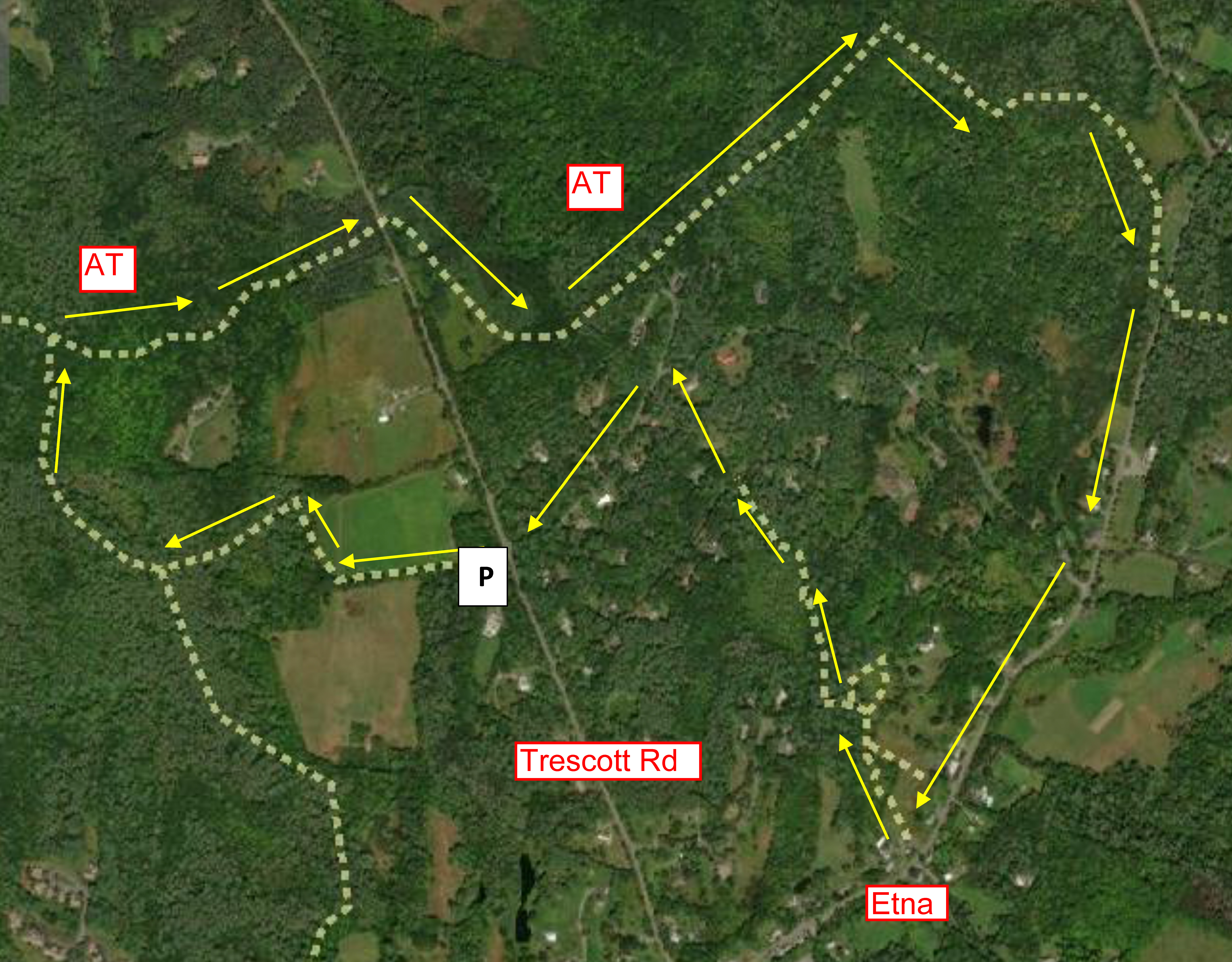
 This is a mostly easy hike with a few short steeper sections and some with tricky footing among roots or rocks. The route is well-blazed and signed.
BRIEF HIKING DIRECTIONS
FULL DIRECTIONS
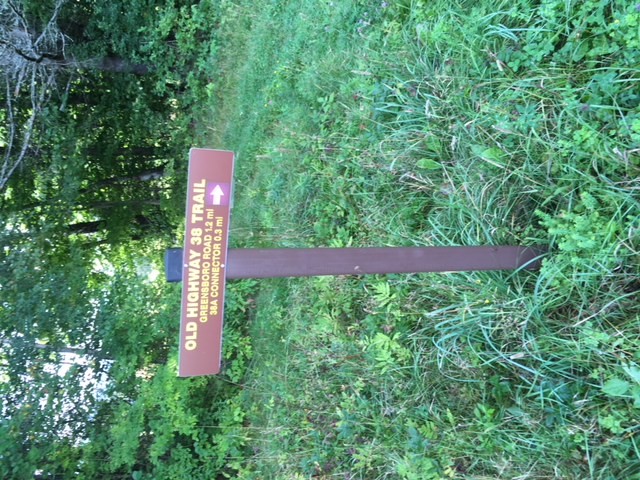 5 minutes’ walk brings you to the top of the rise and a brown/yellow trail sign where two mown paths meet. Look back at R – easily visible is a white 20th century home built as a country retreat by retired architect Archer Hudson. Beyond another hedgerow stood the Adams Farm house from 1790 until 2024, a former tavern and home of the family that once owned the former farmland you are exploring now. Hudson purchased land that included the Adams barn – and then burned it down. Dartmouth College later bought the property and carved off his house for resale. While the College referred to it as the “Hudson Farm,” the land ceased to be farmed when Hudson arrived.
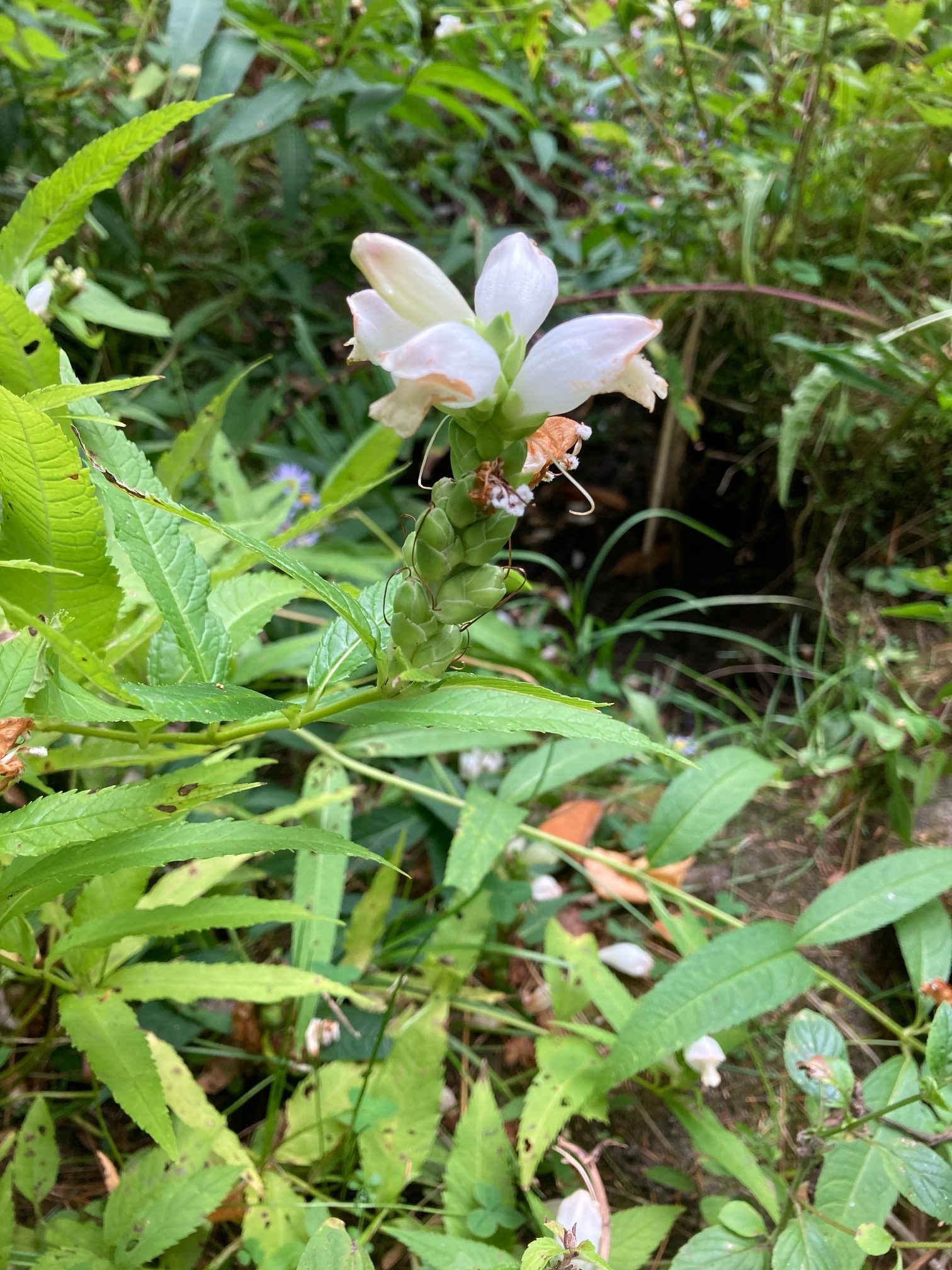 Their bee pollinators must muscle their way inside to gather their nectar.
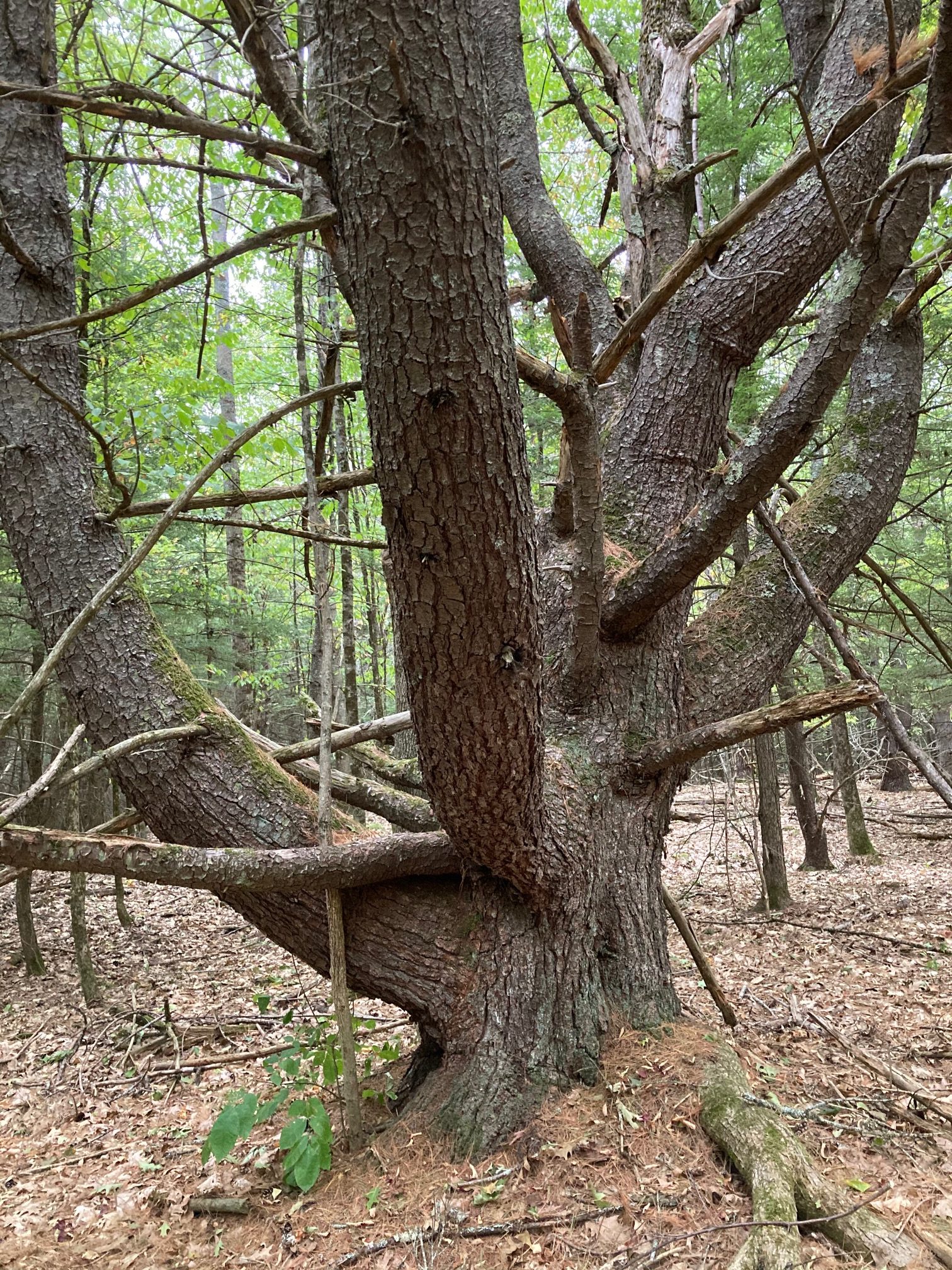 Turn R onto the famed – but here quite humble – Appalachian Trail, heading gently up for 7 minutes to the top of a low ridge. Stop here and note the big old “wolf pine” at L, a pretty impressive character. The growing tip of such a white pine was damaged early in its career, which let side branches develop into competing leaders. No longer valuable for timber, such pines were often left to provide shade for grazing animals – and to spook hikers.
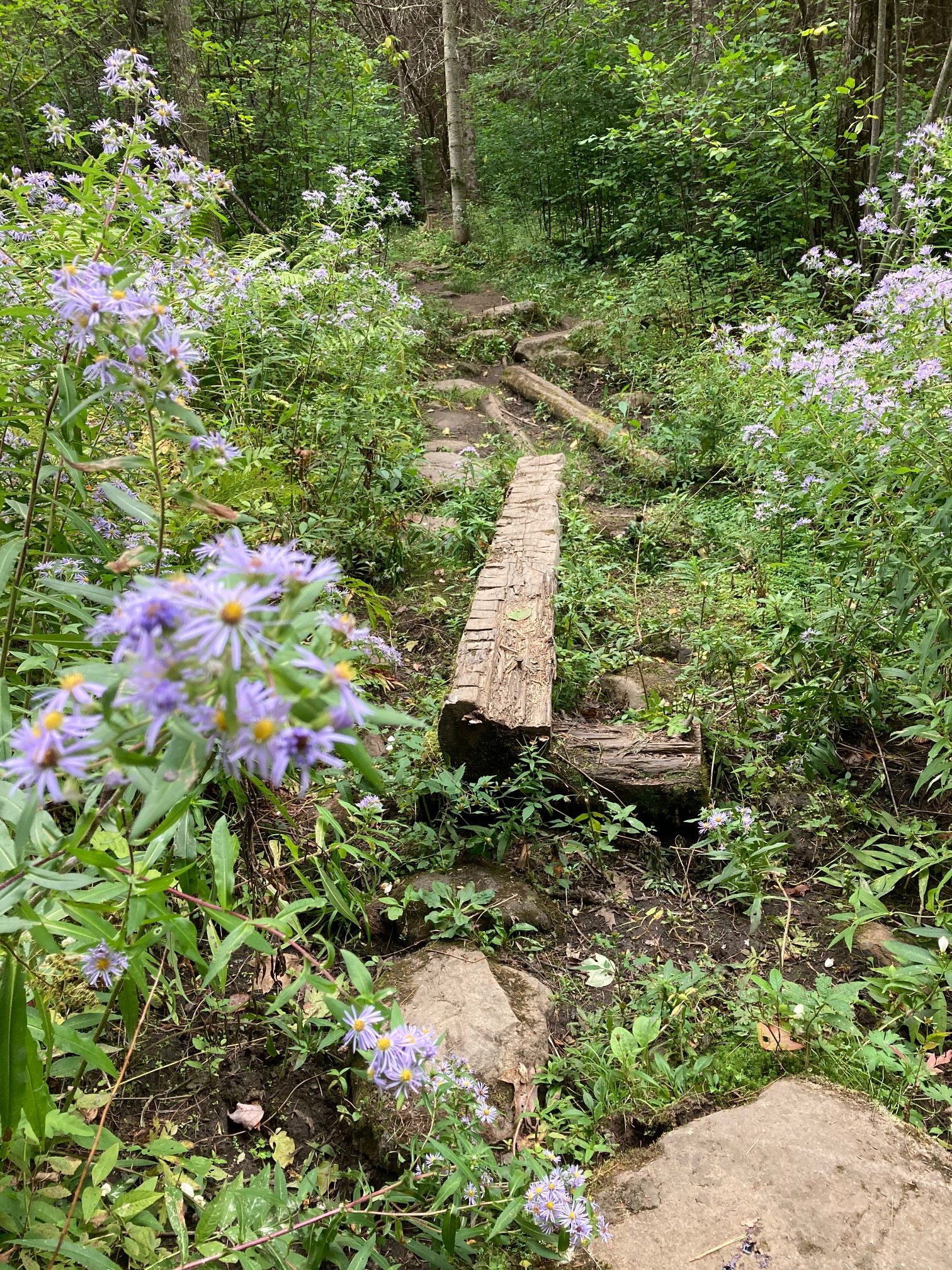 4 minutes later, cross another small wetland decorated with asters and turtlehead.
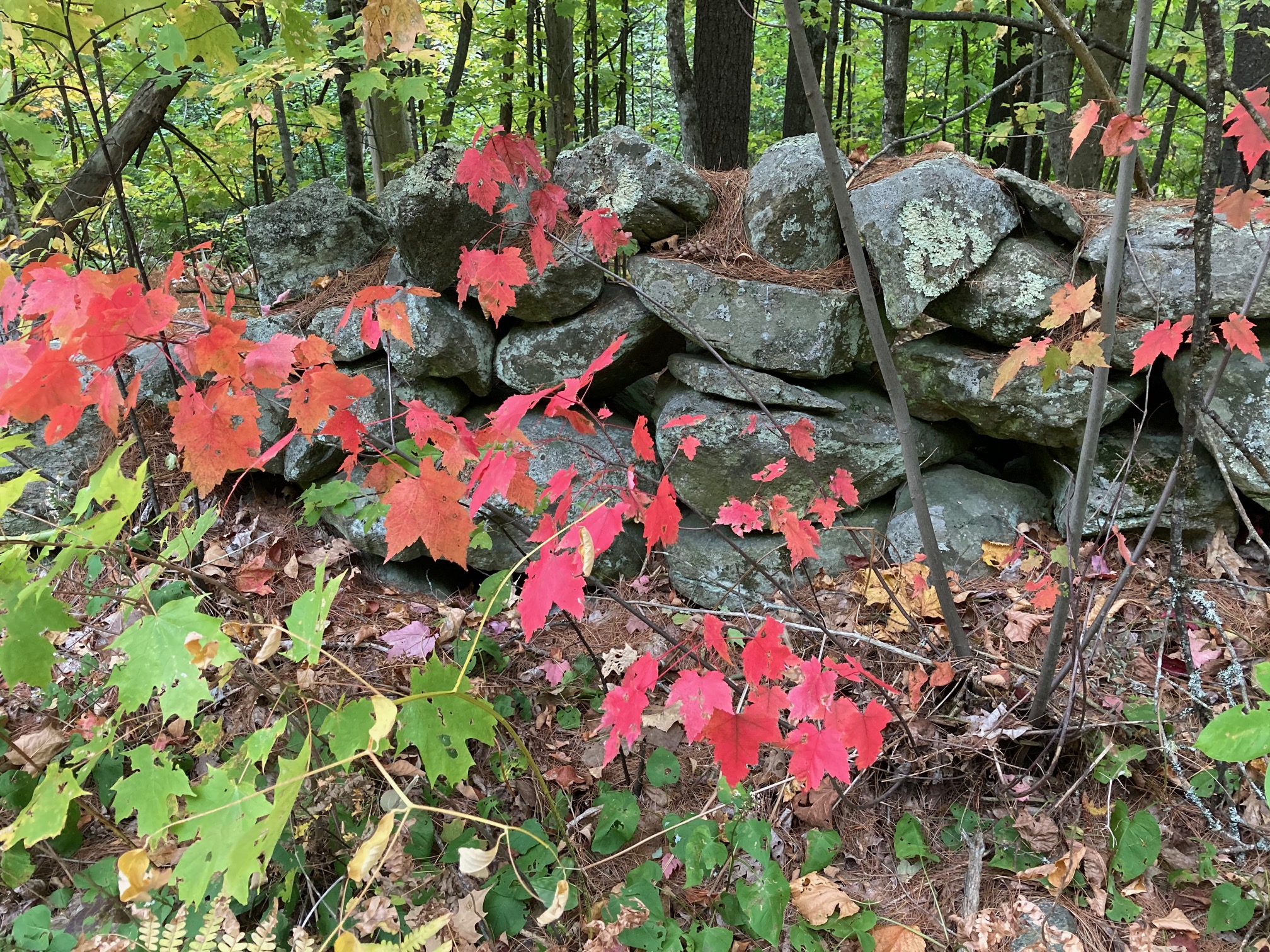
 The trail bears L, arriving at an interesting intersection of stone walls that once must have divided pastures. The AT follows one on your L – note some venerable sugar maples lining it. As the trail rises, this wall becomes even more impressive, nearly reaching chest height. We can’t resist sharing here that in 1870, a government agency estimated that over a quarter million miles of drylaid stone wall had been built in New England and New York, most during a few decades in the early 19th century during the Sheep Craze. Recently, NH’s State Geologist has worked with area volunteers and UNH to create a citizen-based, on-line stone wall mapping tool using LiDAR maps. You can visit this site to see the stone walls you’re “collecting” on this hike (shown in pink on the image), and visit your own home area to see what other walls might exist nearby.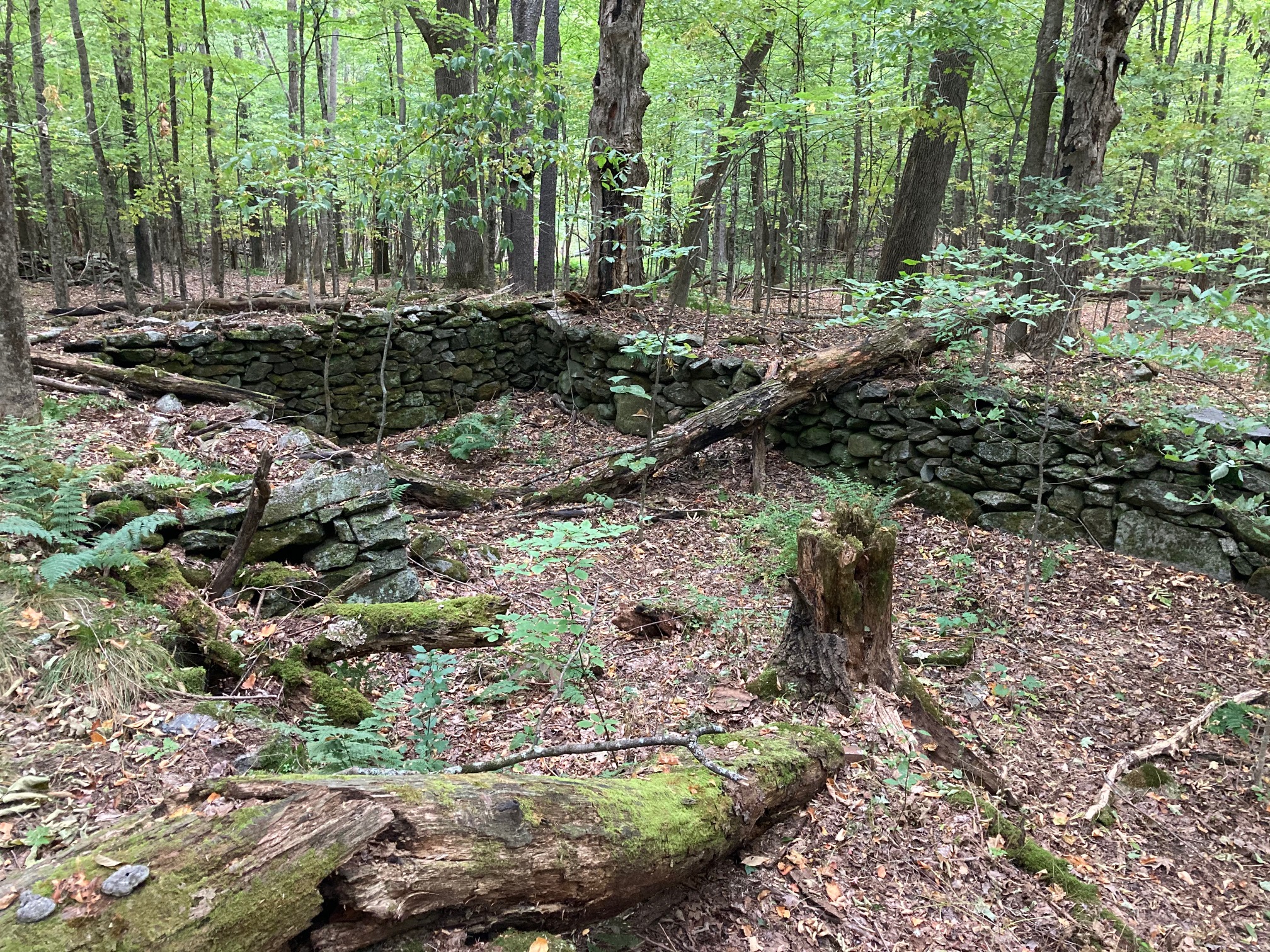
 At Ruddsboro Road, a beautiful stone wall (the 13th or 15th?) creates a centuries-old hypotenuse between the roads. This scenic triangle has been protected by the Town of Hanover. It is part of nearby Mink Meadow Farm, home to a long-time Etna farm family. On one side of the historic Yankee-style barn is the foundation of an old silo – on the other, a tiny former milkhouse that now boasts refrigerated eggs and farm-grown vegetables.
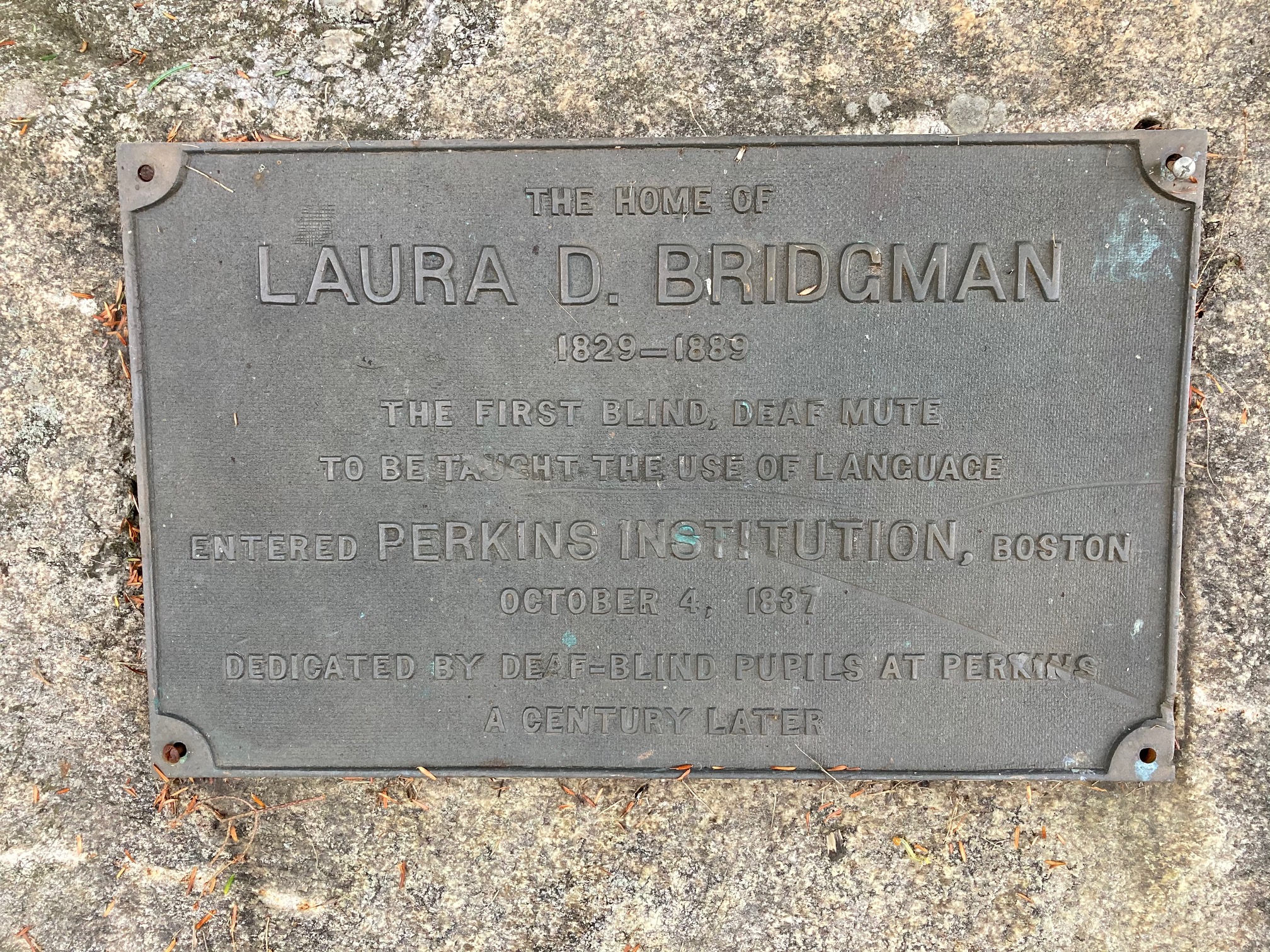 At R is the white 1767 Bridgeman House; the earliest part of this home is likely the middle section with the chimney. Take a moment to read the plaque mounted on the nearby stone. A tributary of Mink Brook passes behind the home and under the road.
 Road. Gifts in her memory allowed the creation of this trail in 2017.10 minutes from the start of Audrey’s Trail, arrive at Woodcock Lane. Turn R toward the lane’s end and L at a sign just before the driveways. Be sure to keep your dog leashed, and please pick up after it.
This Hanover Hike of the Month has been generously sponsored by…
EABs are here, and our ash trees will never be the same. Individual landowners are the best equipped to treat and save trees on private property. Throughout New England, large tracts of forest and roadways will be cleared of trees before infestation (when removal is much safer and lumber may be sold), in stages during the active infestation as budgets allow. Towns all across our region are using state resources to take inventories of ash trees within their town limits, and set priorities for removal or possible treatment. Stay informed: VT Invasives has an easy-to-navigate site, and the UNH Cooperative Extension regularly publishes information, like this blog and accompanying homeowner handout.
As part of an on-going project with the USDA Natural Resource Conservation Service, the Hanover Conservancy has conducted a treatment to control invasive Japanese Knotweed along the corridor of Mink Brook in the Mink Brook Nature Preserve. A special permit has been issued for this work, carried out by a licensed professional under the supervision of our eco-forester, Ehrhard Frost. Our project is funded by the USDA Natural Resources Conservation Service.
Aggressive non-native plants like Japanese knotweed, honeysuckle, bittersweet, and glossy buckthorn steal habitat from native plants and wildlife. We are in the middle of a three-year project to control them.
In the spring of 2012, we began the next phase of this project, replanting with 2000 native trees and shrubs that are well-adapted to growing conditions at Mink Brook Nature Preserve.